‘Tread Softly Because You Tread On My Dreams’ William Butler Yeats.
Using words to express ourselves is a dream for many
What is written isn’t simply words on the page, these words are a part of the writer’s identity, their brainchild and often the child of their heart too.
When I was invited to be one of the section panel for a writing competition, I knew that it would be a difficult task.
Each person who had entered had written with a part of themselves and now we had to choose from amongst them and decide which were the best. All had merit in some way, maybe for the idea, or for a new take on an old idea.
Equally, perhaps the contest organisers had given us a more problematic task because they hadn’t specified a theme, so the topics were exceptionally varied.
Should tragedy and drama take precedence over comedy and the lighthearted ? Does writing about a topical situation or problem gain more points?
These were questions that everyone who was assessing the work had to decide for themselves. And of course, subjectivity came into play too.
Did they follow the rules?
And what about the rules? There was a word limit specified, should someone be be penalized if they went over it? What if by a few words or a lot?
I did my best and tried to be objective and to choose what I genuinely considered to be the best pieces of work. Well aware that by choosing them I was rejecting others.
Fortunately, the responsibility for the choice does not fall solely to me, there is a panel of judges. Will we agree or will they each make different selections? It will be interesting to find out.
All that I can say to everyone who entered is thank you for sharing your work with us. I respect that and I read it as I hope that my work will be read. Congratulations on daring to put your work ‘out there’.
Heartbreak ahead in a love story! Photo by Kerry Sikkema.
The classic definer of a love story is the film Love Story starring Ali Mc Graw and Ryan O’ Neal. It is based on the popular book by Erich Segal. It is a real tearjerker, with the beautiful young couple parted by death. It is a tragedy and almost all of the love stories considered great have sad or tragic endings.
Here are some examples taken from films and books. Tolstoy’s Anna Karenina, Boris Pasternak’s Dr Zhivago, Shakespeare’s Romeo and Juliet, filmed and updated as West Side Story.Othello. More recently Iain Mc Ewan’s Atonement, John Green’s The Fault in Our Stars.JoJo Moyes Me Before You, M.C Steadman’s The Light Between Oceans. And Cecelia Ahern’s Ps. I Love you, and of course ,my all-time favourite Casablanca.
What can be more romantic than Paris?
Romances are different- they promise a reading experience or viewing experience that focuses primarily on the relationship between the couple or as Romance Writers of America says, “Two basic elements comprise every romance novel: a central love story and an emotionally satisfying and optimistic ending.”
Or in simpler terms you are pretty much promised a happy ending and if not a happy ever after, at least the reader gets the happy for now ending.So if we know the ending why do we read romance?
We read for the journey, for the twists and turns of the relationship. A happy ending may be promised but getting there is half the fun. Who doesn’t love a flawed hero or heroine? Or beautiful couple too blind to see that they are destined for each other? Real-life can be dull and bland, but romances are exciting, sexy and fun. It’s far safer to have a fictional lover than a real one. Romance writers are endlessly inventive and contrive new ways for couples to meet and fall in love.
Examples of romances are Pride and Prejudice by Jane Austen and of course, it’s spin off’s Bridget Jones’ sDiary by Helen Fielding and the films Pride andPrejudice and Bride and Prejudice as well as the Bridget Jones trilogy of films. Jane Eyre by Charlotte Bronte is a great read and has been filmed several times The fairy tales Cinderella and The Sleeping Beauty.
Some romance movies are Romancing the Stone, Breakfast at Tiffany’s( but not the book which ends differently) Moonstruck, Brokeback Mountain( a guy to guy romance) Ella Enchanted and a real oldie but a goodie It Happened One Night.Another of my favourite films Love Actually spans both genres as it has both love stories with sad ending and romances with happy ones.
Why do you read romance and who are your favourite authors? Let me know!
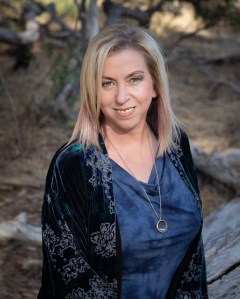
Today it is my pleasure to welcome P.L. Harris and her alter-ego Polly Holmes to chat with us about her writing journey. We first met at a book launch and I asked her if at some point she would be a guest on my blog. She is a busy and versatile writer who writes contemporary romance, romantic suspense as well as cosy mysteries. She also holds down a fulltime job as a teacher so her time is pretty full.
Author.P.L.Harris
What is your latest book about?
My latest book is the first in my Burrum Ridge romantic suspense series, In His Protection. It follows Melody Maddison as she discovers an old photo of her mother with a newborn baby that is neither her, nor her siblings. While she’ll do anything to uncover the truth, someone is willing to go to whatever lengths to keep the truth the secret, even if it means silencing Melody for good.
What inspired it? This book, in fact, the series, is inspired by my niece Kara-Lee through a brainstorming session about two years ago while visiting the Hot Springs at Mornington Peninsula in Melbourne. She asked me, what if you found a photo of Grandma (my mother) with a baby you know nothing about, what would you do?It kind of went from there and it has turned into a series of six books, one for each of the siblings and I can’t wait to write them.
Who is the main character?
My heroine is Melody Maddison. Her mother past away when she was 26 and she has been travelling for 2 years trying to deal with the loss leaving her sister Riley to pick up the pieces. Now she’s 28 and returned home to help her sister sort their mother’s possessions.
My hero is Noah St. Reeve. Noah has been working in Perth and decided to start his own security and protection business, but unsure where to base it. Seeing Melody almost run down by a car cements in his mind his course. To protect her at all costs.
Why should we care about them?
Everyone has a secret, and for Melody finding out the secret behind the photo may lead her to a long lost sibling. If she can uncover the secret she’ll be able to share with them how wonderful her mother really was. We want to find out who the baby is, for Melody’s sake. We want to know if Noah will be able to save her in time and most of all if Melody has the willpower and strength to save her own life in the face of danger.
Often a love of reading leads to writing.
Did you always want to write?
I loved reading and writing stories, but no I never thought I was good enough to write a story that could be published. I loved to make up stories in my younger days. My imagination would always be racing ahead of me. I loved being in a world of make-believe, maybe that’s why I went into the theatre and became a director and drama teacher. A few years ago, I took some time out for me and I started reading again and I realised I could forget the worries of the world for that moment while I was immersed in the story.
Which books did you love as a child?
A love of reading begins in childhood
Sweet Valley High and Sweet Dreams romances were my all-time favourite books to read when I was growing up and I still have most of them today. I loved Nancy Drew, I suppose that is why I love writing mystery novels. Also, Enid Blyton’s the Wishing Chair.
You write in several genes Contemporary romance and Amateur Sleuths or cosy mysteries – was that deliberate choice or do you just have so many ideas? Which came first?
It wasn’t a conscious decision, I kind of stumbled into it. I always wanted to write contemporary romance and I knew I wanted to have drama and suspense in them. So I started writing contemporary romance first. I also knew it was a way for me to deal with certain things going on in my personal life and I could express it through my characters. I suppose you could say it was a kind of therapy.
Then when I was looking for a cover for Callie’s Dilemma I stumbled across Mariah Sinclair’s website where I did indeed find the cover, but also stumbled across the cupcake capers cozy covers and that was it I was hooked. I ended up buying 13 covers but had no idea what a cozy was. Crazy I hear you say. Yep, totally.
Can you see why Polly Holmes fell in love with this cover?
In His Protection went on hold and I had to research the genre. What it was, what you can and can’t do, it was a whole new world. Then I posted on Amazon the dates I was releasing them in 2018. Why I did that I have no idea because it put me under so much pressure to get them out on time and at the same time I was staging the musical Lion King Jr at school.
In the end, it was a huge learning curve, but it also helped me realise that I love writing cozies and also romantic suspense.
Research into each writing style is the key. Know what the readers want and deliver. I had an email from a lady who loved my book but wanted a recipe in the back like everyone else does.
I do have to try and turn off one genre when I am writing another and that’s where my planning comes it. I love to plan my novel out.
What is the best writing advice you ever received?
Never give up no matter how much you feel like it.
Asking for advice can bring positive results.
What is the worst? I’m not sure I have had any bad advice. It’s about knowing which bit of advice to take that will work for you and which bits to leave behind.
If you were starting now would you do anything differently?
I would definitely have learnt more about the self-promotion, social media side of the industry right from the start and started that much, much earlier. Follow the experts. If they have tried something and it didn’t work, think carefully if you are going to follow in their footsteps. I would have created another pen name for my different genres, which I have now done, but a year after the first cozy publication. Look out for Polly Holmes in the cozy mystery genre.
You sound incredibly busy how do you manage to fit it all in?
Polly Holmes.
Sometimes, I don’t fit it all in. Although I work full-time, I want to write and I can’t let my busy schedule stop me. It’s something that I can do for me, something that makes me happy (When it’s all going to plan) I do have to try and prioritise especially around the busy times at school like exams and reporting time. Sometimes I am guilty of putting things in the too hard basket and then I feel guilty so out they come and I persist until I achieve it.
Often I ask myself is it worth it? The answer always turns out to be yes. In the long run, I know that I will succeed if I persist. Take the good with the bad and there is always more good than bad.
How long have you been published and how are you so prolific?
I have been published 2 years now and self-published 18 months. I think the key is persistence and learning as you go. You can’t get everything right the first time, but learning from mistakes allows you to improve the next time. Knowing what you want and setting the intention to achieve it.
Tell us three fun facts about yourself.
What makes you smile?
That is a hard one and I’m not sure if they are fun facts. I love old musicals and sometimes I wish I was born back when Gene Kelly, Judy Garland, Ann Miller and the greats were around. Even though I can’t sing it doesn’t stop me from having a go when a great tune comes on.
If I hear music with a good beat, I have to dance no matter where I am. It’s in my blood.
I’m addicted to most reality TV especially House Rules, MKR, Masterchef. I know, it’s very bad.
It has been great learning more about your writing journey- thank you so much for taking the time to chat with us.
Writers talking about their writing. I am delighted to welcome author, editor , speaker . Teena Raffa Mulligan to tell us about her writing.
Teena Raffa Mulligan
1. As someone who writes both for children and adults
how do you switch between the two?
I’ve always written in different styles and genres, whether poetry and fiction for adults and children or the diverse range of non-fiction I worked on during my years in journalism. It’s not a conscious intention to shift focus, so perhaps I do it instinctively. My voice doesn’t really change from one area of writing to the next, only the subject matter.
from Thought Catalog
2 Do you work on more than one title at once?
Always! I am so impressed by writers who can focus on one project until it’s complete. I’m too much like a butterfly in the garden, flitting from flower to flower. In my case it’s going from one idea to another. I write whatever is in my mind at the time, so it might be a fragment of poetry, sections of a picture book, scenes from a short story or novel. The process works brilliantly for short things because I complete them quite quickly, especially if an idea takes hold and over a period of a few days won’t leave me alone. It’s an incredibly inefficient way to write novels, though, because I take such a long time to get to The End.
A question that need answering
3 You are a hybrid author- that is you are both
traditionally published and self-published- what do you find are the benefits
and pitfalls of each approach?
Ah! The big question. My preference as an author is to have a publisher pick up my manuscripts. The key benefit is being confident they know their business and will do the best they can to make my book a success. There is also still quite a widespread community perception that being published by a ‘proper’ publisher means you are a ‘real’ writer. Being published by one of the big publishers can open up opportunities that are less likely to be offered to self-publishers.
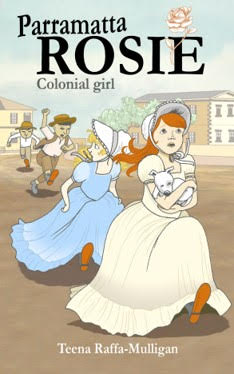
This title is popular with schools
As a self-publisher, I am a small business owner, responsible for every aspect from actual book production to admin, distribution, sales and marketing. My strength is in coming up with ideas and writing stories. To be a really successful self-publisher, you have to be a savvy business person and I don’t see myself wearing that role very well. I am learning but of course while I am reading blogs, watching videos, listening to podcasts and attending workshops about all the aspects of being a self-publisher I need to know, I am not writing. However, I love creating books and I have a number of unpublished manuscripts on file that I would like to see in print. The big plus of self-publishing is the control I have, the ease of print on demand production and how quickly I can release a book onto the market.
The Apostrophe Posse is an adventure story about a group of children whose good intentions create chaos in their small community.
That leads me to the biggest downside of traditional
publishing. It can take a long time to find a traditional publisher, sometimes
years. Even though I have had a dozen books published through traditional
publishing, I still get more rejections than acceptances. It’s a competitive
market. Even when I do get a manuscript picked up, there is usually another
long wait between signing the contract and celebrating the book’s release.
With illustrated books I often have no input into the
illustrations and in some cases don’t see finished artwork until the book is
released. Some of the newer small publishers such as Serenity Press and Daisy
Lane Publishing do encourage author and illustrator input or collaboration and
that’s a bonus.
Then there’s the financial aspect. Unless your book
happens to be a runaway best seller, there’s no point thinking of giving up the
day job. The standard 10 per cent royalty on a recommended retail price (RRP)
of 15.50 is only $1.55 per book sold. In some cases if it’s a picture book,
that 10 per cent is split between the author and illustrator, so only five per
cent each. Print runs in Australia are often small and many publishers don’t
offer an advance. Children’s authors in particular usually rely on payments for
author talks and workshops, plus the annual education and public lending rights
payments to supplement income from royalties, whereas indie authors who promote
themselves and their titles well can make a decent living from their writing.
4 If you were starting now would you still be
a hybrid author or would you choose one approach over the other?
I began
submitting to publishers in the 1970s when the world of publishing was vastly
different. It wasn’t as easy or affordable for authors to publish their own
work, plus there was such a stigma about self-publishing, which was widely
considered a vanity option for writers who weren’t good enough to get a
contract. I wanted to be taken seriously as an author. I still do and like it
or not, self-published authors are still seen as second best in some sectors of
the industry.
I ventured
into self-publishing because my stranger danger picture book was long out of
print but I was still reading it during school visits and being asked by
parents and teachers where they could get a copy. It seemed like a good idea to
produce a new edition so I did. At the time I only intended to self-publish
that one book but the changes in the publishing industry and the introduction
of new technology led me to rethink that decision. Meeting the inspirational
Karen McDermott of Serenity Press and Making Magic Happen Academy came at the
right time and motivated me to stop thinking about publishing my own books and
do it.
However, to
answer your question, if I were starting now I would still choose to try for a
traditional publishing contract first, with self-publishing as a backup option.
5. How do you capture your ideas?
Pen and paper allow the words to flow for Teena
Usually with pen and paper initially. I
only go to the computer when I have something to get me started, even if it’s
just the opening paragraph, a conversation or a scene. I keep notebooks and
pens handy…though sometimes I leave the notebook from my handbag on my computer
desk when I’ve been working from it. I have used napkins in a café to capture
my idea, the back of shopping dockets, in fact anything I can write on.
6. What are you working on now?
I am writing a quirky story for young readers about a kid who hires a parent tamer. At first Talibut Vish looks like he will be the solution to Mike’s out of control mum and dad but the stranger’s special powers only escalate the chaos in his life. It’s a fun story but because I’m not a planner I get so far then don’t know what happens next. That’s when I go back to the short romance I’m writing for an anthology. It features a gorgeous Labrador with serious anxiety issues…and a mismatched couple, of course.
Teena’s Newest release
7 Do you have any advice for aspiring writers?
Write in the way
that works best for you. If that means having a nine to five working day five
days a week and planning every aspect of your novel before you start writing,
then do that. If your creativity works best with an unstructured, fluid
approach, embrace it. After all, would you go for a long walk in a pair of
shoes that didn’t fit? It’s difficult in this era of social media, but try to
avoid measuring your productivity and achievements as a writer against anyone
else’s. The creative spirit is sensitive — it needs a positive environment to
flourish, so be gentle with yourself. Explore where your writing takes you and
enjoy the journey.
Bio: Teena Raffa-Mulligan is a reader, writer and daydream believer who believes there is magic in every day if you choose to find it. She discovered the wonderful world of storytelling as a child and decided to become a writer at an early age. Teena writes across genres and her publications include poetry and short stories for children and adults, picture books, chapter books, middle grade novels and romances. She shares her passion for books and writing by presenting talks and workshops to encourage people of all ages to write their own stories.
Teena’s February release is a lively collection of poems that encourages young readers to enjoy poetry and marvel at the wonder of words. Funny, thoughtful, silly and serious, Sleepy Socks and Sometime Rhymes is a celebration of the everyday and the imaginary. It is ideal for home or classroom, for sharing or for quiet moments curled up in a comfy chair.
It is often difficult to assess your own work, but there is a way to see what you are doing.
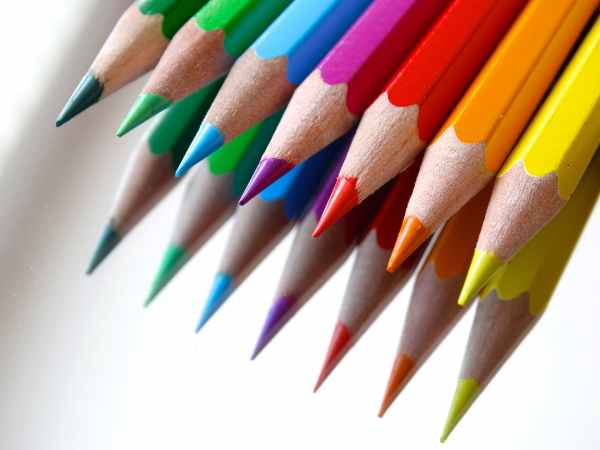
Pencils to highlight your writing.Photo by Pixabay on Pexels.com
Colouring! Yes really, grab yourself some coloured marker pens or coloured pencils and prepare to be enlightened.
I heard of this concept during a presentation that Natasha Lester author of The ParisSeamstressmade during the Rockingham Writer’s convention. This is how she explained her system. By the way, this applies to all popular commercial fiction but not so much to literary fiction.
Action – Coloured PINK
Dialogue- Coloured-BLUE
Thought– Coloured YELLOW
Description-Coloured GREEN
Transitions—BLANK -NOT COLOURED
Back story-Coloured ORANGE.
She suggested colouring action and dialogue first to show you the balance of those,
Ideally, they should be most of the page, at least 60% but not in huge blocks of colour. Interweave with other aspects of the story.
Doing this enables you to SEE what you need to change, to add or subtract.
Photocopy a couple of pages of a favourite book. Photo by Kaboompics .com on Pexels.com
If you feel this may be too confronting you can always photocopy two or three pages from a book and try it with them.
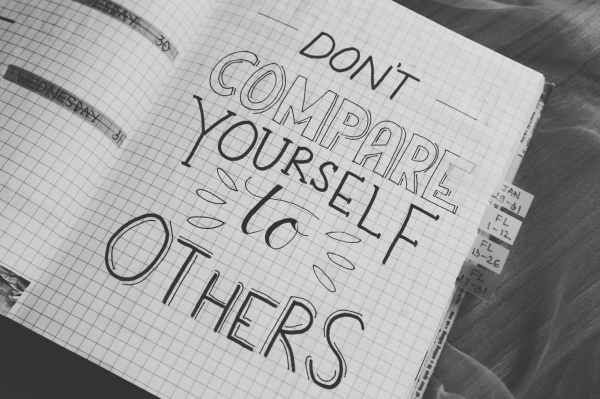
Your goal is not to emulate them, your goal is to see whether they get it right or wrong and to improve your own writing. The only person you need to compare yourself with is the self of yesterday are you learning, growing, progressing?
Remind yourself how far you have Ncome.Photo by Bich Tran on Pexels.com
There are worse things than a computer crash, but its hard to think of them when one happens to you.
This week, it was my turn and not only did the computer crash, it crashed spectacularly. It completely wiped itself, even of Windows.
How? I don’t know.
Why? Still not sure if it was a virus, or something else.
At the moment I am in stage one of the classic stages of grief, denial. ‘This can’t be happening’
Photo by Kat Jayne on Pexels.com
BUT it is and my computer guy has had the machine since Monday and is no nearer to finding a solution.
I miss it. Worse, I was finalizing a submission for a writing contest with a cut off date of July 13th and I have lost almost a week.
Sure the laptop is dinky and cute, but I am used to my desktop and prefer it.
Still, I held out hope-maybe the expansion drive, would help restore files. It should have and it would have, if only it had been re-plugged in when I bought a new computer.
So, back up your work NOW, send it to One Drive or Dropbox, send it to a USB and if you have an expansion drive be sure that it is connected.
I may have lost almost a years worth of work, which is one hell of a reminder.
Something that I found recently has really improved my writing. I shared the information with some writing buddies and discovered that they hadn’t known about it either, They were impressed and I was inundated with effusive thanks.


Photo by Startup Stock Photos on Pexels.com
Now I’m sharing it with you. It may not apply to all systems until recently I used Apache Open Office and I don’t think it is there.
Then I switched to Microsoft Word and that’s where I found it. The Audio function. It is at the top left-hand corner of the page when you click over to tools. It says Read, Aloud Speech. For Mac users, there is a Speech function once you access System Preferences. I simply Googled that to find out.
Experimentally I tried it out. It has transformed my writing experience.
Photo by Startup Stock Photos on Pexels.com
Many of you will have been told to read your work out loud to allow you to spot errors and awkward phrasing. It is still good advice. Audio is better though, as the robotic voice disassociates you from your writing. We all fall a little in love with our words
Photo by Kaboompics .com on Pexels.com
It is easy to read your own work and see what you expect to see. I had proofread a document twice without noticing that scared had been typed sacred, Quite a different meaning!
Listening enables you to hear if your words flow, or if there is a section that needs work. It might be a good use of this function to run your document through it before you send it to an editor.
There many opinions on what makes a good writing group, but I think that we can agree on a few things.Most of us need the right sized group, one that meets at a convenient time and place and one that helps us to grow as writers and to achieve our aims.So, if you are considering joining a writing group it pays to ask a few questions.
What is the composition of the group?Does it matter to you if it is a mixed or a single-sex group? Both types of groups can have advantages and disadvantages. A mixed group provides a microcosm of the potential readership for your stories or book. However, that can be challenging ii your stories are not mainstream.Crime and fantasy/sci-fi appeal to both genders, while other types of writing typically appeal more to one or the other. For example, romance writing has a mainly female authorship and readership; while war stories mostly appeal to men.
Does Age Matter?The general age in the group may be a factor for you, although it is wise to be flexible about this. Talent is not confined to one age group and both younger and older members can contribute to the dynamic of a mixed age group.3. How friendly do you need the group to be?Many of us complete our best work inspired by a little ‘friendly’ competition. And the operative word is friendly. Many writers have a horror story or two to tell of savage criticism towards their work or even their personality( a real no, no!) which has wounded them and eroded their confidence in their writing abilities. A good facilitator should prevent this, reminding everyone that the focus is solely on the work. Any group that is not welcoming to new members and encouraging of them is not a place that you want or need to be.

4 What do you want?
A good writing group is a community of like-minded people, one that provides that ‘safe space’ in which to discuss your work. There is no need to bore your long-suffering family, instead talk to the people who understand the blow of rejection and the thrill of success. The members of a writing group near you.
As I was writing this post I asked various group members about their experiences with our writing group. The group I attend meets weekly and is a mixed group.Members attend writing events and the group books authors as speakers.
5. What Writing Group Members Say About Their Writing Group
One member said’ I need the inspiration of others work, I am fascinated by the way that other people write and think’.
This is an aspect of a writing group that is so intriguing, that there are so many different approaches to writing about one topic.
Another commented’ each week I struggle and I am amazed when people say that I am improving.’As mentioned earlier, we may be the harshest critics of our own work and a group can provide objectivity.
A third said ‘the group has inspired me to try different styles and ways of writing’
A veteran of other groups noted that ‘some groups tend to be dominated by egos, which can be very stressful’
A member who had not written since junior school commented that it was ‘right place, right time,’ adding cheekily the group picked me!’ She continued more seriously by saying that ‘written has been ( and is) challenging, yet stimulating’
As for me, it is no exaggeration to say that joining a ringgit group changed my life. Writing group members encouraged me to apply for mature age university entrance. I was accepted and had some of the most challenging yet thrilling years of my life. Following on from that I submitted my writing and had some stories and articles published in national magazines. None of which I would have accomplished without the help and support of my writing group.
So pluck up your courage and think about joining your local writing group. Your local library will most likely have the details of local groups
Did you keep the promises that you made to yourself and to others?
Are you nearer your goal?
Are you proud of what you have achieved this year?
Did you use this precious year wisely?
OR did you fritter your time away?
For many of us, the end of the year is both a time of celebration, but also for self-reflection.
CHANGE BEGINS IN YOUR THOUGHTS.
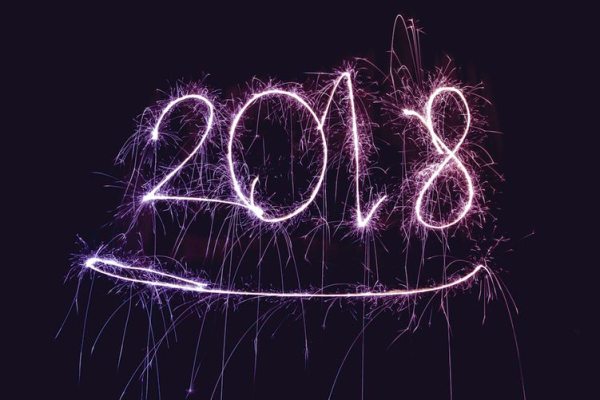
I was already considering what I had achieved this year when a prompt popped up on my Facebook feed from Karen McDermott of Serenity Press She asked a simple question.’ What is your word for 2018?’
The idea was to choose a single word that included all the concepts and things that you wanted to achieve in the next twelve months. Many people had replied with their word choice and many of their words resonated with me. Yet,none seemed exactly right
It nagged away at me, I kept reading and thinking ,but my perfect word eluded me . It simmered away in my brain as words were tried and then discarded. While I applauded other people’s choices, no one word felt right to me.
My word appeared when I was writing my early morning pages. I noted down a few words, Progressing, Enjoying, Completing. And then suddenly I thought’ I need to focus,’ and there it was , my perfect word
Focus, to pay close attention
So focus on I want to achieve in my writing and in my personal life.
Reflecting on this year, it was easy to see that I had not focused .Instead, I had done things that appealed to me without asking do they further my ultimate goals?
So this year my writing focus is on completing the first draft of my novel and then editing it. After that? Who knows?
My personal focus is one shared by many, improving my health by losing weight. I haven’t been paying attention and it shows. Time to get back on track.
Will you choose Focus as your word of the year , or does something different appeal? Please let me know.
Am I doing what I want to do? Am I getting closer towards my goal?
Image Pinterest
Should I have a goal? The answer to the last question, by the way, is YES.
The Cheshire Cat in Alice In Wonderland gave Alice this advice
The Cheshire Cat image Pinterest
At the beginning of 2017, I made a list of the things I wanted to achieve with my writing, and as the year draws to a close I am reviewing it and assessing it. Here’s what I discovered.
The Good: I achieved far more than I originally intended
The Bad: While I did far more than previous years, I was not specific enough.
The Ugly Truth: I am no further towards my goal than I was at the beginning of the year
How did this happen?At the start of the year, I made a list of practical things I could do to extend my writing. Then the list held nine items, one of which was to start a blog.
At years end the list had grown to sixteen items, as I added things I thought would be interesting or fun to do.Everything on the list depended on me doing something. The only actions that I can control are my own. I cannot make readers or editors like my work. My task is to write and to improve and not try to second guess what others will think.
What did I achieve? I wrote a novella, a long short story, an 8-word story, I submitted to a couple of magazines, took some courses, attended some author talks and a writing convention and completed National Novel In Month.
A lot you might think BUT I haven’t done much to achieve my real goal of completing a novel and getting it published. I have been busy, very busy and in one sense productive, but I have not got any nearer to my goal.
I scattered my efforts, and now I know this I intend to make another list for 2018. It will have fewer items but a bigger goal to finally write that book! The book that I have wanted to write for so long, but hesitated to do so. I am giving myself permission to try.
What do you want to achieve in 2018? Maybe you should make a list of the steps to take to get you there. Let me know what you plan on achieving.