via Join In The Fun! Join In The August 2018 Tea Party!
I am sharing this from The Little Mermaid, after all, who doesn’t love tea parties and book talk?
via Join In The Fun! Join In The August 2018 Tea Party!
I am sharing this from The Little Mermaid, after all, who doesn’t love tea parties and book talk?

In spite of July being a busy and challenging month, I did manage to keep up with my reading. For a writer, reading is essential but more than that its a pleasure. I cannot imagine my life without reading.
The Blue Fairy Book by Andrew Lang
A feeling of nostalgia had me reaching for this well-loved childhood classic. Beautifully produced and with the original illustrations, it is a visual delight. Reading now as an adult, I was surprised at how some of the stories defied the happily ever after tradition.
The Olive Sisters by Amanda Hampson
After reading Amanda Hampson’s later book The Yellow Villa I was looking forward to reading this. Initially, I found the dual timeline confusing. As I read on the strands of the story became clearer. The sisters came to Australia with their family from Italy. Their family relationship is complex. Later, one of their descendants inherits the farm. For her, it becomes a refuge and retreat as she uncovers more about her past and long-lost family secrets.

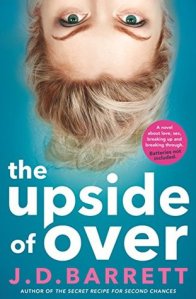
The Upside Of Over by J.D Barrett
When TV newsreader Olivia makes a drunken mistake her whole life implodes. She loses her marriage, her career and her self-esteem. How did it all go so horribly wrong? And what can she do now?
Luckily, a couple of friends are still there for her as she picks up the pieces. Through her own efforts and with their help she discovers that the network was eager to get rid of her due to her age and this was the perfect excuse.
Olivia discovers that there is an upside to over, being your own person and authentically yourself. Funny, sexy and wise, but not necessarily for the prudish.
Disclaimer I won a copy in a contest but was under no obligation to review the book.
Date with Mystery by Julia Chapman

Book Three in The Dales Detective Series.
Although I hadn’t read the two previous books I still enjoyed this book. It’s an amusing mystery full of Yorkshire wit and grit. About three-quarters of the way through the book I had a good idea as to what had happened but no idea of the why-the reason. I am not too sure about the contrivance of having characters called Samson and Delilah. It stretches the bounds of credulity, but it seems to work for TV’s Shakespeare and Hathaway, so that may just be a personal quibble.
The Beach Hut by Veronica Henry

When I picked this book up I hadn’t realised that it was an interconnected series of short stories. All are based around the beach huts on Devon’s Everdene beach. A peek into many lives over the weeks they use the huts. Some stories come full circle while others remain incomplete, left to the readers’ imagination. Initially, I found it rather disconcerting to move from one story to another. I feel the cover gives an impression of a lighter read, while the stories have more depth.
PR Secrets for Savvy Authors By Louisa West

As a writer, you need to get your work noticed and for that, you are going to need PR. (Public Relations) Maybe you are an introvert who doesn’t want to put yourself ‘out there’. Or perhaps you are an extrovert but don’t want to come over as ‘pushy.’ And what is PR anyway?
Help is here, Louisa West is both an author and PR professional. The book is written specifically for authors and addresses their concerns. From learning the difference between PR and marketing, to how to feel ‘legit’ and how to establish your ‘brand’.
The importance of networking effectively with readers, writers and influencers. It demystified the whole process of how to post in social media and how to make it work for you. Presented in an easy to read style – this book should be an important part of any authors toolbox
I learnt a lot and I think it’s a great read for anyone wanting to know more about PR
Disclaimer I was gifted an advanced reading copy in exchange for an honest review.
‘The past is a foreign country they do things differently there.’ LP. Hartley ‘The Go-Between’

It’s a question that every writer hears ’where do you get your ideas?’ At times it is tempting to say something flippant like ‘Oh I pop down to the App store and pick a few.’ But it’s not that easy.
So where do writers get ideas? The answer is probably as individual as the writers themselves. Some writers are meticulous planners and know what they will write about. They are known as Plotters and have inciting incidents and compelling storylines at their fingertips. They have detailed plans and character profiles and timelines all prepared. At times I wish I was more like them, but I am not.

My stories begin who knows where? Although the term Pantsers is applied to writers like me, I prefer to think I am an organic writer. One who builds as she goes, capturing a fragment of a sentence, an intriguing snippet or topic, an overheard remark or a sliver of memory.

Recently, I entered a short story contest and the picture prompt didn’t initially inspire me. The trick was to let my imagination roam, to go beyond the obvious. In one story I used three incidents I knew about, things that had happened to me, or to friends. Sibling rivalry, an attempted drowning and person with mental illness. The facts bled into the fiction, hopefully giving it an authenticity.

Writing the second story I began with a fragment of memory of clearing the attic and as I wrote a long-forgotten memory surfaced. I must have been about six and we were at the beach. My father dived in and rescued a woman who was attempting to drown herself. I remember her sobbing, with dad’s jacket placed around her shoulders. And then it’s a blank- what happened next, I have no idea.
I’d forgotten about it until now, so many years later, when I fictionalised it and used it in my story. If memory chooses not to come at my call but returns unprompted it is still a valid memory. The trick is to hold on to that image, that memory, and see if more will follow.
Nowadays, I think of my past as a place to explore. I can get there from here. The route may be unfamiliar, the recall imperfect, but it is uniquely mine. Others may recall the same events, but not in the same specific way. What attracted me, what was important to me, may not have mattered to them. My stories begin here, and I realize that the things that matter to me always have.
June was a good month for reading as I read seven books almost all of them were fiction. I like to try different authors and genres as well as reading nonfiction. Here are this month’s selections.

The Dark Lake by Sarah Bailey

I don’t want to give plot details away, so of necessity, this review will be non-specific. I was fortunate enough to win a copy of the book in a giveaway but was under no obligation to review it.
I think the book is well written, but I found it hard to warm to the protagonist Gemma Woodstock. She is obviously a dedicated detective and this time the case is personal. While I found the hint of intrigue about the past worked well initially, I grew impatient with the continual repetition and non-disclosure. The book had an unpredictable ending, overall, I didn’t find it a satisfying read
Lilac Girls by Martha Hall Kelly

This is fiction based on fact and tells a remarkable story of how an American Socialite and philanthropist Caroline Ferriday made a difference to so many women’s lives. Always a Francophile and a volunteer at the French consulate she was gradually drawn into working far more closely with women who had been incarcerated and brutally mistreated in the notorious Ravensbruek concentration camp.
Initially, I found the triple timeline somewhat confusing as each woman’s point of view was presented. American Caroline, Polish Kasia and German Herta. It was worth persevering because this is a story that needed to be told. Unimaginable horrors and deprivations, cruelty, and kindness death and despair, hatred and forgiveness. This is a memorable story, meticulously researched and beautifully written quite unforgettable. The authors note details the research and the real people whose lives were impacted by these terrible events.
Note Caroline Ferriday and Herta Oberhauser were real people Kasia is a composite of many of the Polish women who were held in the
Mail Obsession by Mark Mason
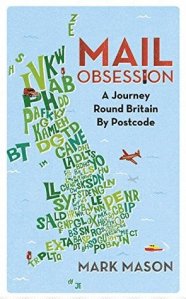
A great book for trivia lovers and those interested in finding out quirky facts about Britain. Not a book to read at one sitting. This is a book to amuse and delight, but one that is probably best read in small doses. There is a temptation to read out many of the amazing facts and bits of information to your long-suffering family.
A few snippets which amused me. In 1879 Belgium trialled using cats to deliver the mail. The thirty-seven cats did not cooperate, ( who would have thought that!)and the trial was abandoned.
The Queen carries several items in her handbag, including a handkerchief, lipstick, spectacles, a folded five-pound note and a handy suction hook to stick under a table to hold the bag itself
My favourite though is that on April Fool’s Day 2010 The company Gamestation inserted a clause in their online contracts which enabled them to claim their customer’s souls.
The Cleaner of Chartres by Salley Vickers

An unknown woman arrives in Chartres and stirs up forgotten feelings and prejudices. Each person sees something different in Agnes Morel with her dark skin and topaz eyes. She cleans the famous Chartres cathedral. Does the cathedral influence her as she polishes the labyrinth walk? Can a wrong ever be righted? Can a sinner find redemption? Is holiness more important than kindness? Everyone has an opinion about her. The town gossips Madame Picot and Madame Beck spend their time speculating about her past. Abbe Paul from the cathedral, Professor Jones and Philippe Nevers all have a certain fondness for Agnes. While Robert, the painter uses her as his muse, model and mistress. Dr Denman wonders if he did right by Agnes. Alain the restorer wants to help her to find her own identity. The nuns’ Mother Veronique and Sister Laurence knew Agnes years ago and their intervention in her story is not the happiest of events,
We saw each person’s perception of Agnes but each time there was something of their personality in the observation too. Was Agnes more sinned against than sinning? Judge for yourself.
The Yellow Villa by Amanda Hampson

Despite its charming cover, this story has more involved in it than you might at first imagine. A young Australian couple Mia and Ben, buy a villa in France hoping to make a fresh start. They meet a sophisticated older couple Susannah and Dominic and are initially impressed with the pair of Expat Brits.
Throughout the story, fresh information is revealed and the veneer of each couple’s ‘perfect’ life gradually discloses uncomfortable truths about their relationships and each other. I thoroughly enjoyed it.
Water Under The Bridge by Lily Malone
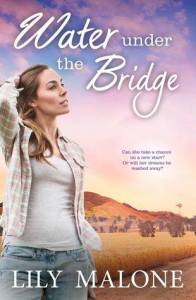
The characters were well drawn, and the story events were intriguing. The relationship between Ella with her son was realistic, a boy out of his depth missing his old life and friends. Ella is challenging herself embarking on a new career, selling real estate and trying to put her past behind her. Handsome Jake is a complication that she doesn’t need, and he’s the owner of the house she has listed to sell. It’s inevitable they will keep meeting.
The story while complicated is certainly feasible and is the beginning of a series by Lily Malone

Do you make many promises? And if so, do you keep them? To me, it is important to keep my promises, so I don’t make many.
I hate being let down and equally, I hate letting people down.
There was one person I routinely let my promises slide for. Can you guess who it was? That person was me.
Maybe you are like that too? Discounting your own needs and wants and importance.

Last week I had a tech crash and was without my computer for the week. Any week it would be annoying, but I had planned to enter a short story contest.And the deadline was Friday 13th – what could be more apt?
I got my computer back on Monday. It was just the basic setup, and a year’s worth of work was gone. I’d promised myself I would enter at least two stories in the contest.
I had two-thirds of one story written and a vague idea for another. The word length for submission was from 1,000 to 4,000 words.

A writer friend cast an eye over the first story. I thought I had completed it and I’d listened to it through the read-aloud function. That read aloud alone picked up fifteen tiny mistakes. My eagle-eyed friend found missing commas, redundant commas, as well as making some pertinent comments. More work! I respect her judgement, so I made the changes. I submitted it with a day to spare. It was about 3,500 words.
What about story two? I had roughed out ideas in a notebook while I was without the computer.

I decided to go for it. I knew my story wouldn’t have the care and attention that the first story had. But my promise to myself was to submit two stories.
I had the germ of an idea and I worked hard on it, and my wonderful friend was even able to have a quick look at it. Again I made changes. Story Two was submitted at 6.30pm on Friday 13th. It was just over 3,00o words.

It’s likely that neither will win a prize, many accomplished writers enter this contest. I felt wiped out, exhausted and yet exhilarated. I’d done it! I hadn’t let myself off the hook. Yes, there were difficulties, but nothing that I couldn’t overcome. It had been hard work, but I felt and feel terrific. Finally, I was giving my writing, my work. the respect that it deserved,

Is this a female thing or a generational thing? Is it the sign of a classic procrastinator?
What about you? Do you find it easy to keep the promises that you make to yourself?

There are worse things than a computer crash, but its hard to think of them when one happens to you.
This week, it was my turn and not only did the computer crash, it crashed spectacularly. It completely wiped itself, even of Windows.
How? I don’t know.
Why? Still not sure if it was a virus, or something else.
At the moment I am in stage one of the classic stages of grief, denial. ‘This can’t be happening’

BUT it is and my computer guy has had the machine since Monday and is no nearer to finding a solution.
I miss it. Worse, I was finalizing a submission for a writing contest with a cut off date of July 13th and I have lost almost a week.
Sure the laptop is dinky and cute, but I am used to my desktop and prefer it.
Still, I held out hope-maybe the expansion drive, would help restore files. It should have and it would have, if only it had been re-plugged in when I bought a new computer.
So, back up your work NOW, send it to One Drive or Dropbox, send it to a USB and if you have an expansion drive be sure that it is connected.
I may have lost almost a years worth of work, which is one hell of a reminder.
 Something that I found recently has really improved my writing. I shared the information with some writing buddies and discovered that they hadn’t known about it either, They were impressed and I was inundated with effusive thanks.

Now I’m sharing it with you. It may not apply to all systems until recently I used Apache Open Office and I don’t think it is there.
Then I switched to Microsoft Word and that’s where I found it. The Audio function. It is at the top left-hand corner of the page when you click over to tools. It says Read, Aloud Speech. For Mac users, there is a Speech function once you access System Preferences. I simply Googled that to find out.
Experimentally I tried it out. It has transformed my writing experience.

Many of you will have been told to read your work out loud to allow you to spot errors and awkward phrasing. It is still good advice. Audio is better though, as the robotic voice disassociates you from your writing. We all fall a little in love with our words

It is easy to read your own work and see what you expect to see. I had proofread a document twice without noticing that scared had been typed sacred, Quite a different meaning!
Listening enables you to hear if your words flow, or if there is a section that needs work. It might be a good use of this function to run your document through it before you send it to an editor.
I hit a rough patch with my writing this week, I’d rewritten and edited one piece so many times I felt like my ideas had dried up. My mind was empty. It was then that I remembered this saying and acted on it.
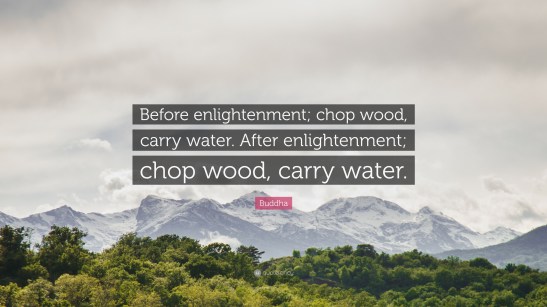
When your mind is going around in its own labyrinth it’s good to have a circuit breaker. and for me, the saying was what I needed.

Although I didn’t chop wood I did carry the chopped logs into the house. Then I planted up some hanging baskets with violas and watered them in.
It amused me to do as the saying suggested, mundane tasks keeping me grounded in my body and out of my own mind.
 The knotty problem was far from my mind as I immersed my hands in water to wash the dinner dishes. It was then that a glimmer of an idea popped into my head. Not a fully fledged idea, just a fragment, but enough to get me excited about my writing again.
What do you do when you hit a rough patch?
Do you need mess to be creative? Is a tidy mind an uncreative one?
It’s a bit like the old writer’s division between those who plot meticulously, ’plotters’ And those who write as it comes, by the seat of their pants, called ’pantsers.’
Most writers fall into one or the other of those categories. Most plotter s squirm at the thought of not having a plan. While more pantsers claim a plan would stifle their creativity.
Equally, I think most people naturally fall into one of two camps on the tidiness and clutter front.
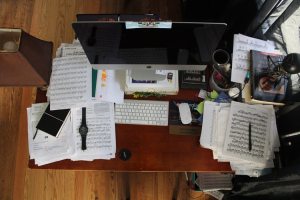
Confession time I’ve always been a bit of a hoarder, old photos, certificates, special clothes, books, so many books, and more prosaic items like pens, and notebooks and glass jars.
Recently I read a book* which not only explored how to deal with your clutter but also what your clutter meant to you. What was your clutter trying to tell you?
One of the insights which shook me was that clutter was not just physical the stuff that you can see, but also mental. Mind clutter includes those random thoughts, of fear, procrastination and even thinking about your clutter.
Delving deeper the reasons for our hoarding make more sense. Those things from the past, the old photos, certificates, or yearbooks They all speak of past achievements and reflect our fears that we won’t achieve more.
Old clothes, some are precious memories, no one is suggesting you get rid of your wedding dress! But others may make you feel bad when you look at how slim you were way back then. We are past the era of make do and mend you know you won’t ever wear them again, but they are taking up mental as well as physical space.
Then there are the clothes that you bought that you have never worn, because you bought on a whim, maybe they are aspirational clothes for a life you don’t lead. They too are clutter, no matter how much they cost.
Paperwork, I am sure that it multiplies in dark corners and for a writer, paperwork can easily accumulate. As I speak I have three shelves filled with random paperwork. Some I know are notes from workshops I attended. Others are multiple hard copies of stories that I have re-drafted or edited. Just looking at it overwhelms me. I know why I don’t want to clear it what if I discard a gem? What if there is a brilliant idea there and I trash it?
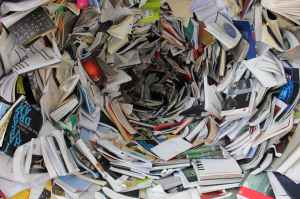
But I have no idea what is there and if I need anything I spend ages trying to find it. So, there it is, this month I am making a commitment to tackle my paper mountain, one shelf at a time. Shred, file or simply toss.
Your turn now what does your clutter mean to you? Safety blanket, comfort, mess?
Disclaimer I do not know the author, I have not been paid to endorse the book it is simply my opinion.
*Note the book that I read that made a lot of sense was What Your Clutter is Trying to Tell You by Kerri L Richardson.
The key to my heart is a good book and in May I read quite a few books. One really touched me, while others entertained me. This month there is a mix of fiction and non-fiction. Whoever it was who said ‘life is too short to read bad books’ I agree with them. I may pick up a book, read a bit and decide it is not for me. I won’t post a lousy review because it didn’t suit me, I will simply stop reading and not mention that book.

Hubble Bubble by Joan Lovering.
A bright and breezy romance with plenty of humour and sprinkling of magic thrown in. When Holly and the other women cast a spell, she specifies she wants ‘excitement.’ She gets that in spades and a couple of hunky men too. Although all are surprised with the results of spell casting, it seems they have effected change and their wishes are coming true.
The Memories That Make Us by Vanessa Carnevale

I was impressed by how much Vanessa Carnevale has developed as a writer since her previous book The Florentine Bridge. The concept of memories making us who we are resonated with me as I struggle with the emotional cost of my close friend’s death. Gracie and Flynn are a relatable couple as she fights to regain her memory. The idea that flowers played a significant part in her recovery seems plausible. Wasn’t it Kipling who wrote’ scent is surer than sight or sound to make the heartstrings crack’? Well written, nicely plotted and well worth a read!
The Sweethearts by Lynn Russell & Neil Hanson

The story of the women and girls who worked at the Rowntree’s chocolate factory in York., United Kingdom, A social history which explores the lives of ordinary women who worked for the giant Rowntree company. It tells how although the work was hard and often physically demanding, the women generally appreciated the time away from husbands and home.
The company seems like a paternalistic employer, who valued a strong work ethic but one with a social conscience. The company provided hot meals, a library, sports facilities, convalescent places and continuing education and even a company pension.
Women’s lives between the wars were incredibly hard and they lived and worked in challenging conditions, bad housing, large families, and before the National Health Service the fear of sickness and injury. The book introduces various women and tells their individual stories
Rowntree’s was York’s largest employer and was well-regarded until it was taken over first by Mackintosh and then later by Nestle. The Quaker care values that saw retired employees being sent a Christmas card and ten-pound voucher to buy chocolate misshapen chocolates was discontinued. Staff was replaced by machines and eventually, even the Rowntree’s name was gone.
Keep The Home Fires Burning by Simon Block

The book starts where the top rating and much-missed television series left off. Even a petition was unable to get it recommissioned. For all of us who enjoyed the series, the book is the next best thing,. We’ve known and loved the characters so we are invested in knowing what happens to them. Set in the Cheshire village of Great Paxford during
Will Campbell the doctor is battling cancer while Erica his pharmacist wife and their daughters all concerned about him. Frances Barden is trying to find her way with Noah, the son of her dead husband and his mistress. Sarah the vicar’s wife is still waiting to hear news of her husband Adam who is a prisoner of war. Theresa the teacher is working hard to make a success of her marriage to squadron leader Nick. Alison is alone apart from Boris her dog, still ashamed at her part in the Barden factory closure. She misses the company of Theresa. Steph and Little Stan are keeping the farm going. Downtrodden Pat is still enduring her marriage to Bob and wondering where Czech officer Marak is. As problems are solved new ones emerge and once again we are left with a cliffhanger ending and waiting for the next book in the series.
Overall, I enjoyed the chance to revisit Great Paxton and I will certainly order the next book. I did, however, have two minor quibbles. Joyce Cameron has become less acerbic and more gullible I was surprised by the use of the word ‘loo’ as I would have thought lavatory, toilet or WC would all have been in more common usage. I checked and the first mention of the word loo was in 1940 by Nancy Mitford according to Oxford Dictionary.
The Paris Seamstress By Natasha Lester
This is the book that made my month, and days after reading it I couldn’t stop thinking about it.

It’s a few days since I finished reading The Paris Seamstress. I enjoyed it so much and I didn’t want to simply write a review filled with superlatives. I relish dual timeline stories if they are well written and this was. Spanning from 1940 France with Estella Bissette, the Parisienne seamstress of the title to 2015 and her granddaughter Fabienne Bissette in Australia, the story crosses decades and continents. It explores family secrets, war, spies, love and loss, madness, revenge, fashion, and relationships. Natasha Lester’s research makes the story impressively believable as real places and people interact with her fictional characters. The story moves seamlessly from past to present and keeps interest and tension throughout. Some of the real characters in the story are so much larger than life, that were they simply fictional creations they would not be believed. Informative and entertaining The Paris Seamstress is Natasha Lester ‘s best book so far.
The Drifter by Anthea Hodgson
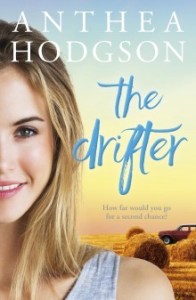
I enjoyed this rural romance, which I picked up prior to the author giving a talk at our local library. Unfortunately, my plans changed and I was unable to attend the talk. Its set in the wheat fields of Western Australia, the author captures the locale and characters well. The subtitle asks ‘How far would you go for a second chance? ‘Both Cate and Henry have secrets they’d prefer not to share, but they are drawn together as they are both close to Ida Cate’s great-aunt. The story had enough complexity to keep me interested.
Close Up by Kate Forster

Subtitled ‘In Hollywood, the drama isn’t always on screen’ this book reminded me of a Jackie Collins Hollywood book. The parallel storyline has two young women trying their luck in Hollywood to escape their loveless pasts. This is contrasted with the lives of Zoe Greene a successful agent to the stars and Maggie Hall an actress whip has been in Hollywood long enough to know how it works. Dylan Mercer a young runaway on a personal quest adds to the mix. I also had fun deciding if any of the ‘star characters were based on real movie stars. The characters and their problem are relatable and I found it an enjoyable read.
What Your Clutter is Trying to Tell You by Kerri L. Richardson
‘Uncover the message in your mess and reclaim your life’
As a confirmed packrat- I know I have a problem. Maybe its a natural inclination or maybe it was growing up with parents who saved string, rubber bands, paper bags, jam jars etc. My house is full of stuff. As a writer words are my resource but my office is filled with paper clutter which I might need ‘someday’.
Through its eight chapter, the book explores our clutter problem is clutter ‘monster or messenger’? Chapter two talks about resistance to dealing with clutter( guilty!) then what’ if your clutter could talk?’
‘Common causes of clutter’ are explored in chapter four, while in five the question is asked ‘is your clutter a handy distraction?’ The book offers practical solutions, and suggestions as well as handy quizzes to discover what your clutter is trying to tell you. The book is a definite call to action – the question now is am I motivate enough to act?
The Right Girl by Ellie O’Neill
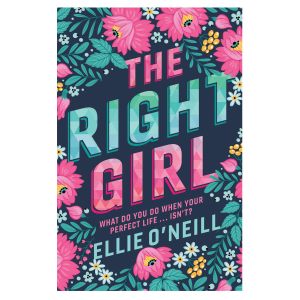
The book defied my expectations of a light read with a love story. Yes, there is a love story, with an appealing heroine and couple of suitable ‘ men. Is she the Right Girl for the Wrong Man?
The book also points to a dystopian future. A future that is inexorably .sucking everyone in. It’s a life where your power to choose for yourself is slowly being taken over by the App that is supposed to make your life function smoothly. An App that with its constant usage that erodes your confidence in your own ability to make informed choices.
This is a cautionary tale of a future, that many of us are sleepwalking towards. Will it strike a chord, who knows? It certainly gave me pause for thought.
The Librarian By Salley Vickers
 T
T
The title appealed to me, I tend to enjoy books about books and reading and this was no exception. It began almost like a children’s’ story as Sylvia Blackwell sets out to make a success of her new job as Children’s librarian in fictional East Mole, Wiltshire, Young and idealistic she want to inspire a love of reading while escaping the confines of her own life.
The era (1958) is well conveyed, with its social niceties and class consciousness. At first, her attempts to encourage children into the library are welcomed and she enjoys a modest success. But then the suspicion of a scandal hovers over her and her own integrity is called into question. The Librarian explores the beginnings of social change, and the power of books, and the importance of libraries, especially for those who cannot afford to buy books.
While reading it so many of my own old favourite books were mentioned. I appreciated the comprehensive book list at the back of the book which reconnected me with other books I had either forgotten or had never read.
The end papers of the book are a design from the Victoria and Albert Museum and add to the feeling that is a book from a bygone era when books were beautiful.
Regency Romance Books Sale for Austen Aficionados
Epic fantasy & military sci-fi author.
TELL YOUR STORIES, LOVE YOUR LIFE
Multi-genre author
SUZI LOVE ~ Writing about romance, history, crazy characters, the Aussie outback and extraordinary places.
Land of my Fathers. The Land of Song, Mountains, Myths and Legends, Stunning Scenery and so much more.
Come play inside a writer's brain, scary!
Where History and Science meets Heart
Books and Tea!
Writer - Arts & Wellbeing - Job Aide
- inspiring kids-
Where dreams are just a bookshelf away ...
A writer from Perth, Australia
Part reality show, part writers' master class. A podcast about the first time you...publish a book.
Book reviews and recommendations from a self confessed book geek


 Sonia Bellhouse- Author.